
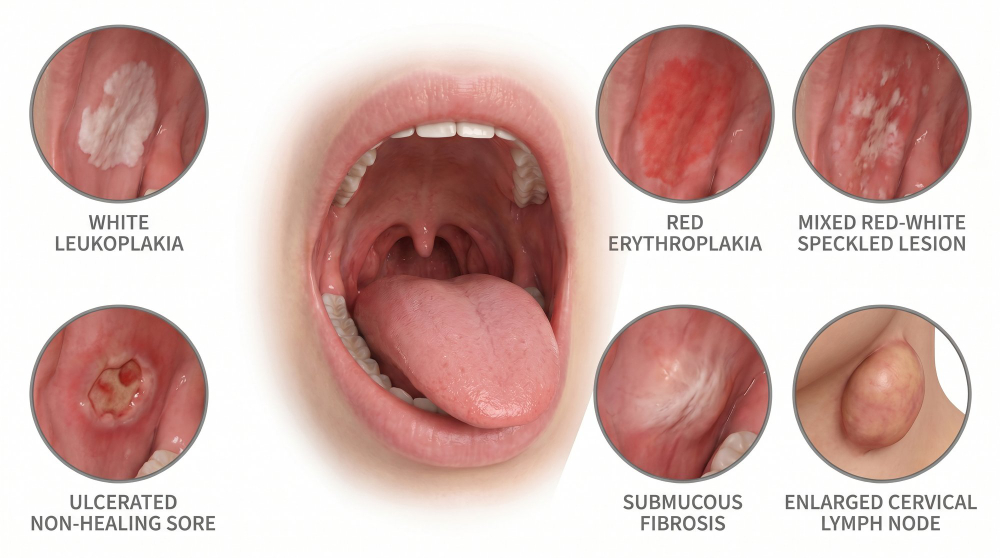
Oral cancer early signs can be easy to miss. However, spotting them quickly makes a big difference. Oral cancer affects the mouth, lips, tongue, or throat. While anyone can get it, some people have a higher risk. Knowing what to look for helps you protect your health. In many cases, early detection leads to better treatment results. This guide explains what oral cancer is, why early detection matters, and which symptoms to watch for. We also cover causes, diagnosis, prevention, and tips for good oral health.
What Is Oral Cancer?
Oral cancer is a type of cancer that starts in the mouth. It can affect the lips, gums, tongue, roof of the mouth, or the inside of the cheeks. Sometimes, it also appears in the throat or tonsils. Many people call it mouth cancer. According to the World Health Organization, oral cancer is one of the most common cancers worldwide. In fact, it affects hundreds of thousands of people each year. Because it can grow quickly, early detection is very important.
Why Early Detection Matters
Early detection of oral cancer saves lives. When found early, the chances of successful treatment are much higher. For example, the American Cancer Society reports that people with early-stage oral cancer have a five-year survival rate of about 85 percent. However, if the cancer spreads, survival rates drop. Therefore, noticing symptoms early and seeing a dentist or doctor right away is key. Regular oral cancer screening in your city or region can help catch problems before they get worse.
Early Signs and Symptoms of Oral Cancer
Many early signs of oral cancer are painless. Still, they should never be ignored. Even small changes in your mouth can be important. Watch for these symptoms:
Sometimes, people notice ear pain or swelling in the jaw. If you see any of these signs, it is important to get checked by a healthcare professional. Early detection makes treatment easier and more effective.
Common Causes and Risk Factors
Several things can increase your risk of oral cancer. While anyone can develop it, some people are more likely than others. Here are the most common risk factors:
In addition, combining tobacco and alcohol raises your risk even more. For example, people who use both have a much higher chance of developing mouth cancer symptoms. Knowing your risk helps you take steps to protect yourself.
How Oral Cancer Is Diagnosed
Doctors and dentists use several methods to diagnose oral cancer. First, they will ask about your symptoms and medical history. Next, they will examine your mouth, tongue, and throat. If they see anything unusual, they may take a small sample, called a biopsy, to check for cancer cells. Sometimes, imaging tests like X-rays or scans help find out if the cancer has spread. Regular oral cancer screening in your area can catch problems early. Early diagnosis gives you the best chance for successful treatment.
Prevention Tips for Oral Cancer
Although not all cases can be prevented, you can lower your risk by making healthy choices. Here are some tips to help prevent oral cancer:
By following these steps, you protect your mouth and lower your risk of developing oral cancer early signs.
Lifestyle Guidance for Oral Health
Good oral health habits support overall well-being. For instance, brushing your teeth twice a day removes harmful bacteria. Flossing daily helps keep your gums healthy. In addition, regular dental visits allow your dentist to spot changes early. Avoiding tobacco and limiting alcohol also protect your mouth. Eating a balanced diet gives your body the nutrients it needs to fight disease. With these habits, you can lower your risk of mouth cancer symptoms and keep your smile healthy for years to come.
Conclusion
If you notice any early signs of oral cancer, do not wait. Schedule a checkup with Dr. Rajat Choudhari at our clinic to get expert care and peace of mind.